Mauritius is now establishing itself as a strategic destination for international families, mobile entrepreneurs, and investors seeking a balance between quality of life, legal certainty, and real estate opportunities. Long associated with a holiday-home market, Mauritius now attracts a more diverse clientele, including young professionals, families, and skilled profiles often referred to as digital nomads.
At a presentation held in Geneva by a leading player in international luxury real estate, several experts provided practical insight into trends in the Mauritian market, changes in European demand, and the key points to watch regarding international taxation and wealth mobility.
Mauritius: an investment and relocation destination gaining momentum
The Mauritian real estate market is experiencing sustained momentum driven by growing international demand. This appeal is no longer limited to the search for a second home: many buyers are now considering a long-term relocation, motivated by a well-preserved natural environment, upgraded infrastructure, and an administrative framework perceived as stable.
Buyer profiles are becoming increasingly diverse. Alongside retirees, historically very present, young families are emerging who wish to offer their children a more peaceful living environment, as well as entrepreneurs seeking an international base compatible with their activities.
Infrastructure, schooling, and services: a decisive argument for families
The decision to invest in or relocate to Mauritius is increasingly based on structural criteria, beyond the appeal of the climate. The island has strengthened its offering in international schooling and essential services, which helps secure family expatriation plans.
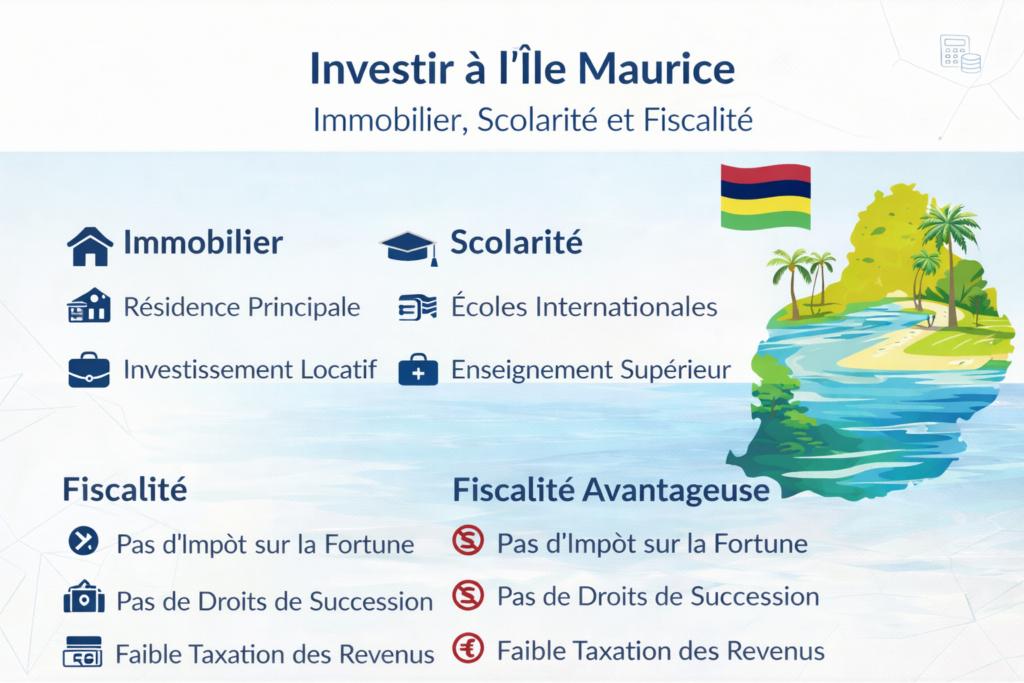
The educational landscape has expanded with the presence of international schools offering several curricula, and the development of higher-education pathways through academic partnerships. This evolution directly meets the expectations of households seeking a coherent relocation from both a family and wealth-planning perspective.
Overview of the Mauritian real estate market: diversification and move upmarket
A market no longer limited to resorts and golf courses
The Mauritian market has changed. Supply is no longer focused exclusively on premium residential developments around golf courses or tourist complexes. Today, there is diversification with apartments, penthouses, villas, and properties in urban or semi-urban areas, meeting more permanent lifestyle plans.
Long-term rentals: a way to secure the project before buying
International mobility projects often follow a gradual approach. Many relocation candidates favour long-term rentals to confirm that the project fits with family life, school integration, and professional organisation. This rental segment, particularly the high-end market, is experiencing increasing pressure due to an imbalance between available supply and demand.
This pressure is reflected in rising rents in several areas, a classic phenomenon in markets with strong international appeal.
Major projects and territorial development: smart cities and new hubs
Investors are also taking an interest in territorial development projects that contribute to the island’s economic and urban transformation. Some integrated programmes, often referred to as smart cities, aim to create mixed-use areas combining housing, services, healthcare, education, retail, and leisure.
These projects help strengthen the appeal of the island’s interior while supporting the development of still less urbanised areas. Another growth driver concerns coastal areas where potential remains significant, subject to environmental and landscape preservation policies.
In this context, one point stands out clearly: international demand is primarily looking for a destination offering a well-preserved natural environment. The value of the Mauritian market rests as much on the quality of infrastructure as on the ability to maintain a balance between development and conservation.
Taxation in Mauritius: clarity, stability, and wealth-planning appeal
Mauritian taxation is frequently presented as a major factor of appeal for individuals considering international mobility. It is characterised by a straightforward framework, sought-after stability, and a generally moderate tax burden.
In summary, several features are particularly highlighted:
-
Income tax with a moderate top rate and a clear structure.
-
No wealth tax, a distinguishing feature for significant assets.
-
No gift tax and no inheritance tax, a key point of attention in wealth planning.
-
No capital gains tax in many configurations.
-
No dividend taxation in the structures discussed, subject to case-by-case analysis.
For a law firm, a notary, or a wealth adviser, the main challenge is to translate these elements into a strategy that complies with the rules of the country of departure and aligns with family objectives.
Key point of vigilance: the country of departure and exit taxation
Do not focus solely on the Mauritian regime
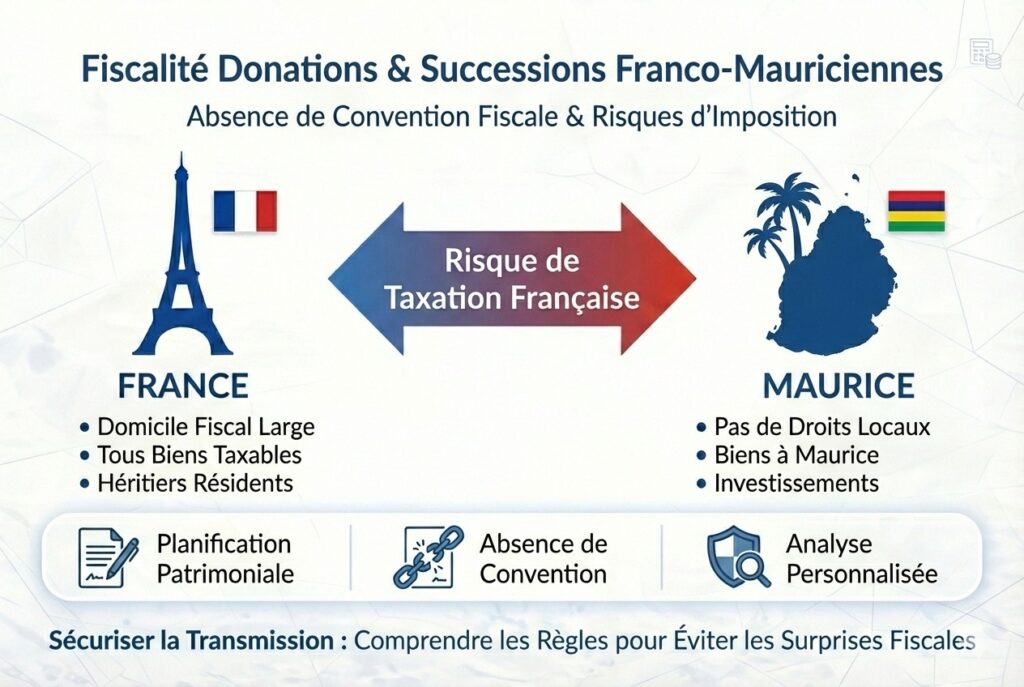
A common mistake in expatriation projects is to focus exclusively on the tax regime of the host country. In practice, the main legal and tax difficulties often lie in the country of departure. The success of a Mauritius project therefore requires a prior analysis of the situation in the home state, in order to avoid unexpected costs or reclassification risks.
Tax residence, exit tax, and estate planning
Depending on the profile, several issues must be addressed upstream:
-
Securing the exit from tax residence in the home country, with an analysis of domestic criteria and any risks of continued ties.
-
Exit tax and similar mechanisms, which may apply to entrepreneurs and holders of equity interests.
-
Inheritance taxation in the country of departure, which may continue to have effects regardless of the Mauritian situation.
-
Wealth structuring and documentation, to ensure consistency between asset structuring, residence, and family objectives.
In practice, the challenge is to build a comprehensive strategy combining real estate, international mobility, and tax security, with particular vigilance during transition periods.
Mauritian real estate and wealth strategy: recommended approach
From a wealth-planning perspective, an investment in Mauritius can meet several objectives: real estate diversification, improved quality of life, preparation for family mobility, or optimisation of wealth transfer. However, the relevance of an acquisition depends on the overall structuring of the assets and the constraints of the country of origin.
A professional approach generally relies on:
-
Defining the project as a residence, rental investment, or relocation.
-
Legal analysis of the holding structure and contractual security.
-
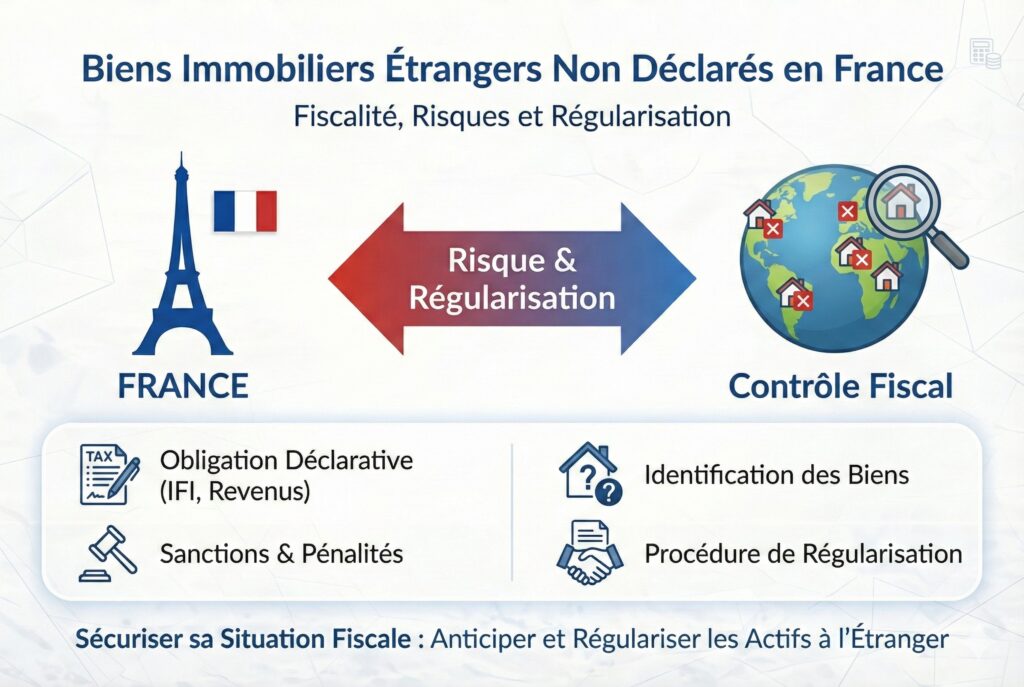
Tax mapping including the country of origin, host country, and any jurisdictions where assets are located.
-
Family planning integrating schooling, healthcare, mobility, and wealth governance.
Conclusion: an attractive destination to be integrated into a well-managed cross-border strategy
Mauritius offers a particularly favourable environment for international real estate projects, combining quality of life, a diversified property offering, and an attractive tax framework. This momentum is attracting a growing European clientele, including younger profiles often seeking a new way of life.
That said, the approach must remain rigorous. The success of the project depends less on local taxation than on the ability to secure the exit from the country of origin, anticipate the consequences regarding tax residence, exit taxation, and estate planning. Support from a cross-border specialist lawyer, notary, or wealth management adviser is a key lever for legal certainty and peace of mind in wealth planning.